Showing posts with label ruler. Show all posts

Tuesday, 23 July 2024

Pravarasena I: The Illustrious Ruler of the Vakataka Dynasty


Pravarasena I, a pivotal figure in the history of ancient India, reigned over the Vakataka dynasty from approximately 270 to 330 CE. His tenure marked a significant period of prosperity and cultural flourishing in the Deccan region, leaving a lasting impact on political dynamics, artistic achievements, and religious patronage.

Pravarasena I ascended to the throne during a tumultuous period when the Vakataka dynasty was consolidating its power in central India. Little is known about his early life, but his accession to power marked a turning point for the dynasty, propelling it into a phase of unprecedented growth and influence.

Pravarasena I was renowned for his military prowess, expanding the territorial boundaries of the Vakataka kingdom through strategic alliances and conquests. His campaigns extended the influence of the dynasty across significant parts of central India, including present-day Maharashtra and Madhya Pradesh.

Pravarasena I was a notable patron of art and architecture, fostering a flourishing cultural environment within his kingdom. He commissioned numerous temples and monuments, many of which exemplify the architectural style characteristic of the Vakataka period.

Pravarasena I's reign witnessed the flourishing of religious diversity, with significant support extended to both Hindu and Buddhist communities. His patronage of Buddhism is particularly notable, evidenced by the construction and embellishment of Buddhist viharas and stupas.

Pravarasena I's legacy endures as a testament to his vision and leadership, shaping the socio-cultural fabric of ancient India in profound ways:

Political Stability: His astute governance and military acumen contributed to a period of relative stability and prosperity for the Vakataka kingdom, enabling it to thrive amidst regional rivalries and external pressures.

Cultural Renaissance: The patronage of art, literature, and architecture under Pravarasena I catalyzed a cultural renaissance, leaving behind a rich legacy of artistic achievements that continue to inspire scholars and enthusiasts alike.

Historical Context: His reign provides valuable insights into the political dynamics and socio-economic conditions prevailing in ancient India during the 4th century CE, highlighting the interplay between regional powers and the emergence of distinctive cultural identities.

In conclusion, Pravarasena I stands as a towering figure in the annals of Indian history, revered for his military prowess, cultural patronage, and visionary leadership. His contributions to the Vakataka dynasty and the broader cultural landscape of ancient India underscore his enduring significance as a catalyst for political stability and cultural flourishing. Through his legacy, Pravarasena I continues to be celebrated as a beacon of India's rich historical tapestry, illuminating the path for future generations to explore and cherish.


Monday, 22 July 2024

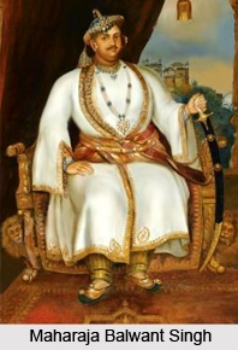
Balwant Singh: The Ruler of Bharatpur


Balwant Singh, a significant figure in the history of Bharatpur, was the Maharaja who ruled over the princely state of Bharatpur in Rajasthan during the late 19th century and early 20th century. His reign, from 1887 to 1918, was marked by both administrative reforms and military prowess, positioning Bharatpur as a formidable state amid the British colonial landscape. Balwant Singh's legacy is characterized not only by his governance but also by his conflict with British authorities and his efforts to modernize his state.

Born in 1865, Balwant Singh belonged to the Jat royal family, which had a long-standing history in the region, tracing its roots back to the Jat power established by Suraj Mal in the 18th century. Balwant Singh ascended to the throne at a young age following the death of his father, Maharaja Kishan Singh. As a ruler, he inherited the complexities of a state that was both strategically vital and embroiled in the socio-political dynamics of colonial India.

Balwant Singh was known for his progressive attitude towards governance. He instituted various reforms aimed at modernizing the administration of Bharatpur. Understanding the need for effective governance, he emphasized the importance of law and order, education, and economic development. Under his rule, the state's infrastructure saw significant improvements, including the development of roads, irrigation systems, and public institutions. Balwant Singh also advocated for education, establishing schools and encouraging higher literacy rates among his subjects.

Despite his modernization efforts, Balwant Singh’s tenure was not without conflict. He displayed a strong sense of sovereignty and resisted British encroachment. The British authorities perceived him as a significant challenge, particularly due to his close ties with the Indian National Congress and his willingness to support the national movement, which sought to challenge colonial rule.

In the late 19th century, tensions flared as Balwant Singh took a stand against British interference in regional politics. His assertiveness culminated in the 1900 agitation, during which he resisted British attempts to impose their hegemony over Bharatpur. This defiance resulted in skirmishes with British forces, but Balwant Singh negotiated his way through these conflicts, maintaining the independence of his state, at least in a nominal sense.

Balwant Singh's contributions to Bharatpur extended beyond military and administrative realms. He was a patron of the arts and culture, recognizing the importance of fostering a rich cultural heritage. His court became a center for artistic endeavors, and he supported local artists and craftspeople, enhancing the cultural tapestry of the region.

Furthermore, Balwant Singh was instrumental in preserving the architectural grandeur of Bharatpur. The construction of significant structures during his reign, including palatial buildings and temples, reflected his commitment to preserving the heritage and identity of Bharatpur. Notably, he is remembered for promoting the famous Keoladeo National Park, a UNESCO World Heritage site, which is home to diverse avian life.

Balwant Singh's rule over Bharatpur stands as a notable chapter in the history of Rajasthan and India. His efforts to modernize the state while asserting its sovereignty against colonial forces left an indelible mark on the region. The balance he maintained between tradition and progress, as well as his commitment to cultural patronage, ensured that his reign was characterized not only by challenges but also by achievements that resonate in the annals of Bharatpur’s history. His legacy serves as a reminder of the complexities faced by Indian rulers during the colonial era and their persistent quest for autonomy in a rapidly changing world.


Saturday, 20 July 2024

The Coins of Sikh Rulers: A Historical Perspective


The coins of the Sikh rulers represent a fascinating intersection of history, culture, and numismatic art. These coins not only served as currency but also as conduits of political power, religious expression, and economic stability during a tumultuous period in Indian history. Understanding the origin and significance of these coins provides insight into the prevailing socio-political landscape of Punjab and beyond from the 18th century onward.

The Sikh Empire emerged in the early 19th century under the leadership of Maharaja Ranjit Singh, who united various principalities in Punjab and established a formidable kingdom that reignited the region's economic and cultural vibrancy. The empire, which flourished from 1799 to 1849, was characterized by its secular ethos, military prowess, and progressive governance. Ranjit Singh, often referred to as the "Lion of Punjab", played a pivotal role in the expansion of the Sikh Empire and the re-establishment of Sikh pride following centuries of oppression.

The origin of Sikh coinage can be traced back to the early Sikh gurus. Guru Nanak, the founder of Sikhism, lived in an era dominated by the Mughal Empire, and the Sikh community often found itself at odds with Mughal authorities. However, it was not until Ranjit Singh's time that a distinct Sikh coinage began to emerge. Ranjit Singh's ascension to power marked a break from Mughal traditions, as he aimed to create a unified identity for the Sikh populace.

Sikh rulers issued various types of coins over the years, reflecting the influence of both indigenous and foreign numismatic practices. The principal denominations included rupees, half-rupees, and a range of smaller coins, often made from silver or copper. The coins typically bore inscriptions in Persian, Gurmukhi, and sometimes, English, reflecting the multicultural context of the empire.

One of the most notable features of Sikh coins was the imagery and symbols depicted on them. The coins often featured the image of the Maharaja, religious symbols like the Ik Onkar (representing the unity of God), and motifs that exhibited a blend of Indian and Persian artistic influences. This rich iconography served to promote the political legitimacy of the rulers while also reinforcing their Sikh identity.

The coinage of the Sikh rulers was not merely a representation of power; it also played a crucial role in the economic stability of the empire. A robust currency system facilitated trade, commerce, and agricultural development within Punjab and its neighboring regions. Coins circulated widely, supporting both local economies and increasing the empire's engagement in long-distance trade routes connecting India with Central Asia and beyond.

The decline of the Sikh Empire began in the mid-19th century, especially after the Anglo-Sikh Wars which ultimately led to the annexation of Punjab by the British in 1849. However, the legacy of Sikh coinage continues to resonate. Collectors and historians highly value these artifacts, viewing them as essential records of the sociopolitical climate of their time. They offer insights into the religious and cultural identity of the Sikhs, the empire's economic practices, and artistic achievements.

In conclusion, the coins of the Sikh rulers reflect a rich tapestry of history, symbolizing not only the economic realities of their time but also the cultural and political aspirations of the Sikh community. As tangible reminders of a vibrant empire, they continue to be a subject of fascination and research for numismatists, historians, and enthusiasts alike. The examination of these coins allows for a deeper understanding of the Sikh Empire's significance in shaping modern Indian history.


Friday, 19 July 2024

Dodda Krishnaraja I: Architect of Mysore's Prosperity


Dodda Krishnaraja I, a prominent ruler of the Mysore Kingdom in the early 18th century, played a pivotal role in shaping the region's history and establishing Mysore as a formidable state in South India. Ascending to the throne in 1734, Dodda Krishnaraja I initiated a series of reforms and advancements that propelled the kingdom towards prosperity and stability.


Under his rei0gn, Mysore experienced significant economic growth and infrastructural development. Dodda Krishnaraja I implemented policies that boosted agriculture, trade, and commerce, thereby enhancing the kingdom's financial stability. His administration focused on improving irrigation systems and promoting industries, fostering a conducive environment for economic flourishing.


Militarily, Dodda Krishnaraja I continued the legacy of his predecessors by expanding Mysore's territories through strategic alliances and successful military campaigns. His leadership strengthened Mysore's defense capabilities and secured its borders, safeguarding the kingdom against external threats.


Culturally, Dodda Krishnaraja I was a patron of arts and literature, supporting scholars, poets, and artists. His court became a center of cultural excellence, contributing to the growth of Kannada literature and the arts during his rule. His patronage enriched Mysore's cultural heritage and bolstered its reputation as a hub of intellectual and artistic pursuits.


Dodda Krishnaraja I's reign marked a prosperous era in Mysore's history, characterized by economic dynamism, military prowess, and cultural vibrancy. His visionary leadership and enduring contributions continue to resonate in the annals of South Indian history, reflecting his legacy as an architect of Mysore's prosperity and cultural richness.


Wednesday, 17 July 2024

Sulaiman Khan Karrani: The Afghan Ruler of Bengal

Sulaiman Khan Karrani, a prominent figure in the history of medieval Bengal, was an Afghan noble who rose to power as the Sultan of Bengal in the 16th century. His reign marked a significant period of political upheaval and military conflict in the region, as he sought to establish and consolidate his authority over the diverse and fractious territories of Bengal.

Sulaiman Khan Karrani was born into the Karrani tribe, a Pashtun ethnic group hailing from the rugged mountains of present-day Afghanistan. The Karranis were known for their martial prowess and administrative skills, and Sulaiman Khan inherited these traits, which would shape his destiny as a powerful ruler in the Indian subcontinent.

Sulaiman Khan Karrani's ascension to the throne of Bengal came at a tumultuous time in the region's history. The decline of the Mughal Empire and internal strife among various regional powers created opportunities for ambitious leaders like Sulaiman Khan to seize power and carve out their own domains. He capitalized on these circumstances and established himself as the Sultan of Bengal in the early 16th century.

One of the defining features of Sulaiman Khan Karrani's rule was his military prowess and strategic acumen. He led several successful military campaigns against rival kingdoms and local chieftains, expanding his influence and extending his authority over large parts of Bengal. His skill as a military commander earned him the admiration of his followers and the fear of his enemies, solidifying his reputation as a formidable ruler in the region.

In addition to his military exploits, Sulaiman Khan Karrani was known for his administrative reforms and efforts to promote economic development in Bengal. He introduced measures to improve governance, encourage trade, and stimulate agriculture, bringing a degree of stability and prosperity to his realm. His policies helped create a conducive environment for commerce and cultural exchange, attracting traders and artisans from various parts of the subcontinent and beyond.

Despite his achievements, Sulaiman Khan Karrani's reign was not without challenges. He faced resistance from rival factions, internal dissension, and external threats from neighboring powers, including the expanding Mughal Empire under Emperor Akbar. The conflicts and power struggles that ensued took a toll on Bengal and weakened Sulaiman Khan's grip on power.

Ultimately, Sulaiman Khan Karrani met his downfall in a decisive battle against the Mughal forces led by Emperor Akbar. The Battle of Tukaroi in 1575 proved to be a turning point in Bengal's history, as Sulaiman Khan was defeated and killed in the conflict. His defeat marked the end of the Karrani dynasty's rule in Bengal and paved the way for Mughal dominance in the region.

Sulaiman Khan Karrani's legacy as a dynamic and ambitious ruler continues to be remembered in the annals of Bengal's history. His contributions to the political and military landscape of the region, as well as his efforts to promote administrative reforms and economic growth, leave a lasting imprint on the history of medieval Bengal. Though his reign was marked by conflict and turmoil, Sulaiman Khan Karrani remains a figure of historical significance, embodying the complex and dynamic nature of power and politics in the Indian subcontinent during the 16th century.


Thursday, 4 July 2024

"Mara Varman Sundara Pandya: Reviving Glory in the Pandya Dynasty"


Mara Varman Sundara Pandya, often simply referred to as Sundara Pandya, holds a significant place in the annals of South Indian history, particularly in the context of the Pandya dynasty. His reign, spanning the 13th century, marked a period of cultural and political significance in the region of Tamil Nadu, leaving a lasting impact on the socio-economic fabric of the time.

The Pandya dynasty, one of the oldest ruling houses in South India, traces its origins back to the early centuries of the Common Era. Known for their patronage of literature, arts, and architecture, the Pandyas wielded significant influence in the Tamil lands, often engaging in fierce battles with their neighboring kingdoms for supremacy.

Mara Varman Sundara Pandya ascended to the throne during a period of political turmoil and internal strife within the Pandya kingdom. His reign, which is estimated to have begun around the 13th century, marked a turning point in the history of the dynasty as he undertook ambitious military campaigns to expand his territory and consolidate his power.

One of the notable achievements of Mara Varman Sundara Pandya was his successful military campaigns against the rival Chola and Chera kingdoms, which helped establish the Pandya dynasty as a major political force in the region. His strategic alliances with other regional powers further strengthened his position, enabling him to govern his realm with stability and prosperity.

In addition to his military prowess, Mara Varman Sundara Pandya was also known for his interest in promoting the arts and culture of his kingdom. Under his patronage, literature flourished, with poets and scholars receiving generous support from the royal court. The Pandya capital, Madurai, became a hub of intellectual activity, attracting artists and writers from far and wide.

The architectural legacy of Mara Varman Sundara Pandya can be seen in the numerous temples and monuments built during his reign. The intricate carvings and sculptures adorning these structures bear testimony to the craftsmanship and artistic vision of the artisans of that era. Some of the most famous temples attributed to his patronage include the Meenakshi Temple in Madurai and the Nellaiappar Temple in Tirunelveli.

Despite his military successes and contributions to the cultural heritage of South India, Mara Varman Sundara Pandya's reign was not without challenges. Internal dissent and external threats posed constant challenges to his authority, requiring him to constantly navigate the complex political landscape of medieval South India.

The legacy of Mara Varman Sundara Pandya continues to be remembered and celebrated in the annals of South Indian history. His contributions to the political, cultural, and architectural development of the region have left an indelible mark, inspiring generations of scholars and historians to study and admire the achievements of this illustrious ruler.

In conclusion, Mara Varman Sundara Pandya stands out as a significant figure in the history of the Pandya dynasty and South India as a whole. His reign exemplifies the complex interplay of power, culture, and heritage that defined the medieval kingdoms of the region, leaving behind a legacy that continues to inspire awe and admiration.


Saturday, 29 June 2024

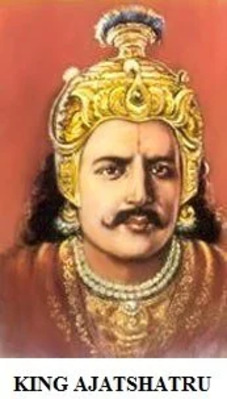
Ajatashatru: The Ambitious Ruler of Magadha


Ajatashatru, the ruler of Magadha, was a significant figure in ancient Indian history, known for his military prowess, political acumen, and ambitious conquests. His reign marked a crucial period in the history of Magadha, a powerful kingdom in ancient India that played a pivotal role in shaping the political landscape of the region. In this article, we will explore the history, origin, period, and achievements of Ajatashatru, shedding light on his legacy as a ruler of Magadha.

Ajatashatru , whose name translates to "he who has no enemies," belonged to the Haryanka dynasty, which ruled over Magadha in present-day Bihar during the 6th century BCE. He was the son of King Bimbisara, a noted ruler who expanded and consolidated the kingdom of Magadha. Ajatashatru ascended to the throne after a period of turmoil and intrigue, during which he overcame a succession struggle to claim his rightful place as the king of Magadha.

The period of Ajatashatru's rule is marked by his aggressive military campaigns and strategic alliances aimed at expanding the territorial boundaries of Magadha. He was known for his skillful use of military tactics and his willingness to employ any means necessary to achieve his political goals. One of the most significant achievements of Ajatashatru was the conquest of the kingdom of Kashi, a powerful rival state that posed a threat to Magadha's interests.

Ajatashatru's reign also saw the rise of the Magadhan Empire as a dominant power in ancient India. Under his rule, Magadha emerged as a formidable force in the Gangetic plain, exerting influence over neighboring kingdoms and establishing itself as a major political player in the region. Ajatashatru's military campaigns and diplomatic maneuvering laid the foundation for Magadha's subsequent preeminence in Indian politics.

In addition to his military exploits, Ajatashatru was also known for his patronage of the arts, literature, and religion. He was a supporter of both Buddhism and Jainism, and his court attracted scholars, philosophers, and religious teachers from across India. Ajatashatru's patronage of these diverse religious traditions contributed to the cultural richness and intellectual vibrancy of Magadha during his reign.

Despite his many achievements, Ajatashatru's rule was not without controversy and challenges. His aggressive expansionist policies and ruthless tactics earned him both admiration and criticism from his contemporaries. The methods he employed to secure his power, including the betrayal of his father and the assassination of his rivals, have been the subject of debate among historians.

In conclusion, Ajatashatru, the ruler of Magadha, was a dynamic and influential figure in ancient Indian history. His ambitious military campaigns, political strategies, and patronage of religion and culture all played a role in shaping the destiny of Magadha and leaving a lasting impact on the history of the region. Ajatashatru's legacy as a ruler of Magadha embodies the complexities of power and ambition, illustrating the challenges and opportunities that accompanied leadership in ancient India.


Friday, 28 June 2024

Mirza Raja Jai Singh: A Legacy of Brilliance and Leadership


Mirza Raja Jai Singh, a legendary figure in Indian history, is renowned for his intelligence, strategic prowess, and contribution to the scientific and cultural advancement of India. Born in 1688 in the royal family of the Kachwaha dynasty, Jai Singh inherited a rich legacy of leadership and valor. His reign marked a golden era in Indian history, characterized by significant achievements in various fields.

Jai Singh's lineage can be traced back to Raja Man Singh I, the famed general in the Mughal Emperor Akbar's court. He was bestowed with the title of "Mirza Raja" by Emperor Bahadur Shah I, signifying his status as a distinguished nobleman. His domain extended over the prosperous kingdom of Amber, now known as Jaipur, in present-day Rajasthan. The city of Jaipur, founded by Jai Singh in 1727, stands as a testament to his vision and architectural brilliance.

As a ruler, Jai Singh was known for his diplomacy and administrative acumen. He maintained cordial relations with the Mughal emperors while safeguarding the autonomy of his kingdom. His military campaigns were marked by strategic brilliance and valor, earning him a reputation as a formidable warrior. Jai Singh's patronage of the arts and sciences contributed significantly to the cultural landscape of the region.

One of Jai Singh's most enduring legacies is his passion for astronomy and mathematics. He commissioned the construction of several observatories, known as "Jantar Mantars," across his kingdom. These architectural marvels served as centers for astronomical observations and research, showcasing Jai Singh's deep interest in scientific pursuits. The Jantar Mantar in Jaipur, with its intricate instruments for measuring time, tracking celestial movements, and predicting eclipses, remains a testament to his scientific curiosity and ingenuity.

Jai Singh's contributions to architecture extended beyond the realm of astronomical observatories. The city of Jaipur, designed according to principles of Vastu Shastra and city planning, stands as a masterpiece of urban design. The majestic palaces, intricately carved temples, and stunning gardens of Jaipur reflect Jai Singh's refined taste and aesthetic sensibilities.

In addition to his achievements in governance, military strategy, and science, Jai Singh was also a benevolent ruler known for his concern for the welfare of his subjects. He instituted policies to promote trade, agriculture, and education, fostering economic growth and social development in his kingdom. His emphasis on justice, religious tolerance, and cultural preservation endeared him to his people and earned him a place of honor in the annals of Indian history.

Mirza Raja Jai Singh's legacy endures as a symbol of India's rich cultural heritage and scientific achievements. His visionary leadership, accomplishments in diverse fields, and commitment to progress continue to inspire generations of Indians. Jai Singh's contributions to astronomy, architecture, governance, and culture have left an indelible mark on the history of India, immortalizing him as a revered figure in the country's narrative.

In conclusion, Mirza Raja Jai Singh's life and reign exemplify the spirit of innovation, scholarship, and leadership that defined the golden era of Indian history. His multifaceted accomplishments and enduring legacy serve as a reminder of the heights that can be reached through dedication, vision, and a passion for excellence.


Thursday, 27 June 2024

Maharaja Ranjit Singh: The Lion of Punjab


Maharaja Ranjit Singh, also known as the Lion of Punjab, was one of the most prominent and revered rulers in Indian history. Born on November 13, 1780, in Gujranwala (now in Pakistan), he was the founder of the Sikh Empire in the early 19th century. His reign marked a significant period in Indian history, characterized by political stability, military prowess, and cultural resurgence. Maharaja Ranjit Singh's legacy continues to inspire and captivate people, showcasing the spirit of unity, strength, and leadership.

The origin of Maharaja Ranjit Singh can be traced back to the Sikh warrior tradition. He inherited the leadership qualities and martial skills from his father, Maha Singh, who was the leader of the Sukerchakia Misl, one of the twelve Sikh misls (confederacies) in the Punjab region. Following his father's death in 1792, Ranjit Singh assumed control of the misl at the young age of 12, displaying remarkable courage and strategic acumen from a tender age.

Under his charismatic leadership, Maharaja Ranjit Singh expanded his territories through a series of military campaigns, unifying various Sikh misls and consolidating his power in the region. By the early 19th century, he had established a formidable empire that encompassed significant parts of present-day Punjab, including Lahore, Amritsar, and Multan. His reign heralded a period of political stability and economic prosperity in the Punjab region, fostering trade and cultural exchanges with neighboring empires and states.

Maharaja Ranjit Singh's significance in Indian history lies in his ability to create a secular and inclusive empire that transcended religious and cultural boundaries. Despite being a devout Sikh, he was known for his religious tolerance and respect for all faiths, earning him the admiration and support of Hindus, Muslims, and other communities within his empire. His administration was characterized by a harmonious blend of Sikh traditions and institutions with elements of Mughal and Persian cultures, leading to a vibrant cultural renaissance in the Sikh Empire.

One of the most remarkable aspects of Maharaja Ranjit Singh's reign was his military prowess and strategic vision. He modernized and professionalized the Khalsa army, transforming it into a formidable force that rivaled the British East India Company. His army comprised soldiers from diverse backgrounds, including Sikhs, Muslims, and Hindus, reflecting his commitment to unity and diversity. The legendary Fauj-i-Khas (Royal Army) under his command became known for its discipline, valor, and loyalty to the Maharaja.

Maharaja Ranjit Singh's legacy in India is intertwined with his efforts to preserve Sikh heritage and promote the welfare of his subjects. He undertook ambitious architectural projects, including the reconstruction of the Golden Temple in Amritsar and the construction of numerous forts, palaces, and monuments across his empire. He also initiated social and economic reforms aimed at improving the living standards of his people, promoting agriculture, trade, and industry.

Despite his military achievements and cultural contributions, Maharaja Ranjit Singh faced challenges from external forces, particularly the expanding British Empire in India. The Anglo-Sikh wars of the 1840s eventually led to the downfall of the Sikh Empire, with the British annexing Punjab in 1849. Maharaja Ranjit Singh's death in 1839 marked the end of an era, but his legacy endured, inspiring generations of Indians with his courage, leadership, and vision.

In conclusion, Maharaja Ranjit Singh stands as a towering figure in Indian history, revered for his exemplary leadership, military prowess, and cultural contributions. His legacy embodies the spirit of resilience, unity, and diversity that continues to resonate in the hearts of people across India and beyond. The Lion of Punjab remains an enduring symbol of strength, courage, and vision, reminding us of the rich heritage and legacy of the Sikh Empire under his reign.