Showing posts with label rajputs. Show all posts

Friday, 12 July 2024

The Rise and Fall of a Jat Lion: Jawahar Singh of Bharatpur


Jawahar Singh, the son of the legendary Jat ruler Suraj Mai, inherited a kingdom brimming with wealth and military might. However, his path to the throne was paved with conflict.  He faced a power struggle with his younger brother, Nahar Singh, who was favored by their father. 

Jawahar Singh's fiery temper and determination ultimately secured his claim, leaving Nahar Singh to flee with his family and treasures.

With the throne secured, Jawahar Singh set his sights on expanding his dominion. He inherited a formidable army, which he further strengthened with European corps and field artillery.  His military prowess was evident in his victories against the Afghan ruler Najib-ud-daula and the Maratha forces under Malhar Rao Holker. He conquered territories like Dholpur, Bhind, Atter, and Kalpi, pushing the boundaries of Bharatpur to their zenith and establishing his control over northern Malwa.

Jawahar Singh's reign was marked by a strong political presence. He maintained a well-organized government, earning respect and fear from other powers in Hindustan. His economic acumen allowed him to manage his finances effectively, ensuring a well-equipped army and a flourishing kingdom.

Despite his successes, Jawahar Singh's reign was tragically cut short. In 1768, he was assassinated by a disgruntled soldier, a victim of his own ambition and the fickle nature of power.  His death marked the end of a turbulent era for Bharatpur, leaving behind a legacy of military prowess, political acumen, and a kingdom that had reached its territorial peak under his leadership.

Jawahar Singh's story is a testament to the ambition and resilience of the Jat rulers. He carved his own path to power, expanding his kingdom and leaving a lasting impact on the political landscape of Hindustan. His legacy serves as a reminder of the complex interplay of power, ambition, and the unpredictable nature of fate in the history of India.



Wednesday, 3 July 2024

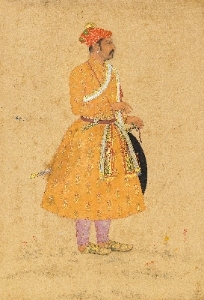
Maharaja Sawai Ishwari Singh: Preserving Jaipur's Royal Legacy


Maharaja Sawai Ishwari Singh, a prominent ruler in the history of Jaipur, played a significant role in the development and transformation of the city during the 18th century. His legacy is marked by his contributions to the cultural, architectural, and political landscape of Jaipur, leaving a lasting impact that is still evident today.

Born in 1729 as the eldest son of Maharaja Sawai Jai Singh II, Ishwari Singh ascended to the throne of Jaipur in 1743 at the young age of 14 following his father's death. Despite his young age, Ishwari Singh proved to be a capable and visionary leader who sought to modernize and enhance the glory of Jaipur. Under his reign, Jaipur witnessed a period of prosperity and growth, solidifying its position as a leading princely state in India.

One of the most notable achievements of Maharaja Sawai Ishwari Singh was his efforts in urban planning and architectural development. During his reign, he commissioned the construction of several iconic structures in Jaipur, including the famous Hawa Mahal, a stunning palace known for its intricate latticework and unique design. Ishwari Singh was known for his patronage of the arts and his support for skilled craftsmen and artisans, leading to the flourishing of arts and culture in Jaipur during his rule.

In addition to his architectural contributions, Maharaja Sawai Ishwari Singh also focused on strengthening the political and administrative system of Jaipur. He implemented several reforms aimed at improving governance and promoting welfare initiatives for his subjects. Ishwari Singh was known for his progressive outlook and inclusive policies, which endeared him to the people of Jaipur.

Maharaja Sawai Ishwari Singh's reign was also marked by strategic military campaigns and alliances that further expanded Jaipur's influence and territories. He successfully led his forces in various battles and conflicts, safeguarding the interests of the state and establishing Jaipur as a formidable power in the region.

The legacy of Maharaja Sawai Ishwari Singh continues to endure in Jaipur, with many of the structures and institutions he established still standing as testaments to his vision and legacy. His contributions to the cultural heritage of Jaipur, his support for the arts and architecture, and his progressive governance have left an indelible mark on the city and its people.

In conclusion, Maharaja Sawai Ishwari Singh remains a revered figure in Jaipur's history, remembered for his leadership, vision, and contributions to the development of the city. His legacy serves as a reminder of the rich heritage and legacy of Jaipur as a vibrant cultural and architectural hub in India.


Friday, 28 June 2024

Mirza Raja Jai Singh: A Legacy of Brilliance and Leadership


Mirza Raja Jai Singh, a legendary figure in Indian history, is renowned for his intelligence, strategic prowess, and contribution to the scientific and cultural advancement of India. Born in 1688 in the royal family of the Kachwaha dynasty, Jai Singh inherited a rich legacy of leadership and valor. His reign marked a golden era in Indian history, characterized by significant achievements in various fields.

Jai Singh's lineage can be traced back to Raja Man Singh I, the famed general in the Mughal Emperor Akbar's court. He was bestowed with the title of "Mirza Raja" by Emperor Bahadur Shah I, signifying his status as a distinguished nobleman. His domain extended over the prosperous kingdom of Amber, now known as Jaipur, in present-day Rajasthan. The city of Jaipur, founded by Jai Singh in 1727, stands as a testament to his vision and architectural brilliance.

As a ruler, Jai Singh was known for his diplomacy and administrative acumen. He maintained cordial relations with the Mughal emperors while safeguarding the autonomy of his kingdom. His military campaigns were marked by strategic brilliance and valor, earning him a reputation as a formidable warrior. Jai Singh's patronage of the arts and sciences contributed significantly to the cultural landscape of the region.

One of Jai Singh's most enduring legacies is his passion for astronomy and mathematics. He commissioned the construction of several observatories, known as "Jantar Mantars," across his kingdom. These architectural marvels served as centers for astronomical observations and research, showcasing Jai Singh's deep interest in scientific pursuits. The Jantar Mantar in Jaipur, with its intricate instruments for measuring time, tracking celestial movements, and predicting eclipses, remains a testament to his scientific curiosity and ingenuity.

Jai Singh's contributions to architecture extended beyond the realm of astronomical observatories. The city of Jaipur, designed according to principles of Vastu Shastra and city planning, stands as a masterpiece of urban design. The majestic palaces, intricately carved temples, and stunning gardens of Jaipur reflect Jai Singh's refined taste and aesthetic sensibilities.

In addition to his achievements in governance, military strategy, and science, Jai Singh was also a benevolent ruler known for his concern for the welfare of his subjects. He instituted policies to promote trade, agriculture, and education, fostering economic growth and social development in his kingdom. His emphasis on justice, religious tolerance, and cultural preservation endeared him to his people and earned him a place of honor in the annals of Indian history.

Mirza Raja Jai Singh's legacy endures as a symbol of India's rich cultural heritage and scientific achievements. His visionary leadership, accomplishments in diverse fields, and commitment to progress continue to inspire generations of Indians. Jai Singh's contributions to astronomy, architecture, governance, and culture have left an indelible mark on the history of India, immortalizing him as a revered figure in the country's narrative.

In conclusion, Mirza Raja Jai Singh's life and reign exemplify the spirit of innovation, scholarship, and leadership that defined the golden era of Indian history. His multifaceted accomplishments and enduring legacy serve as a reminder of the heights that can be reached through dedication, vision, and a passion for excellence.